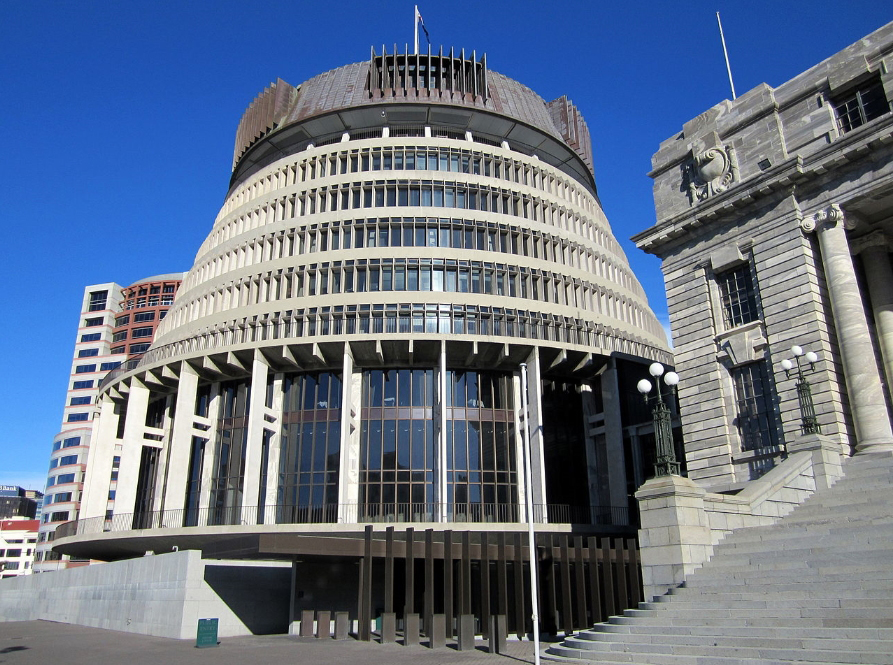
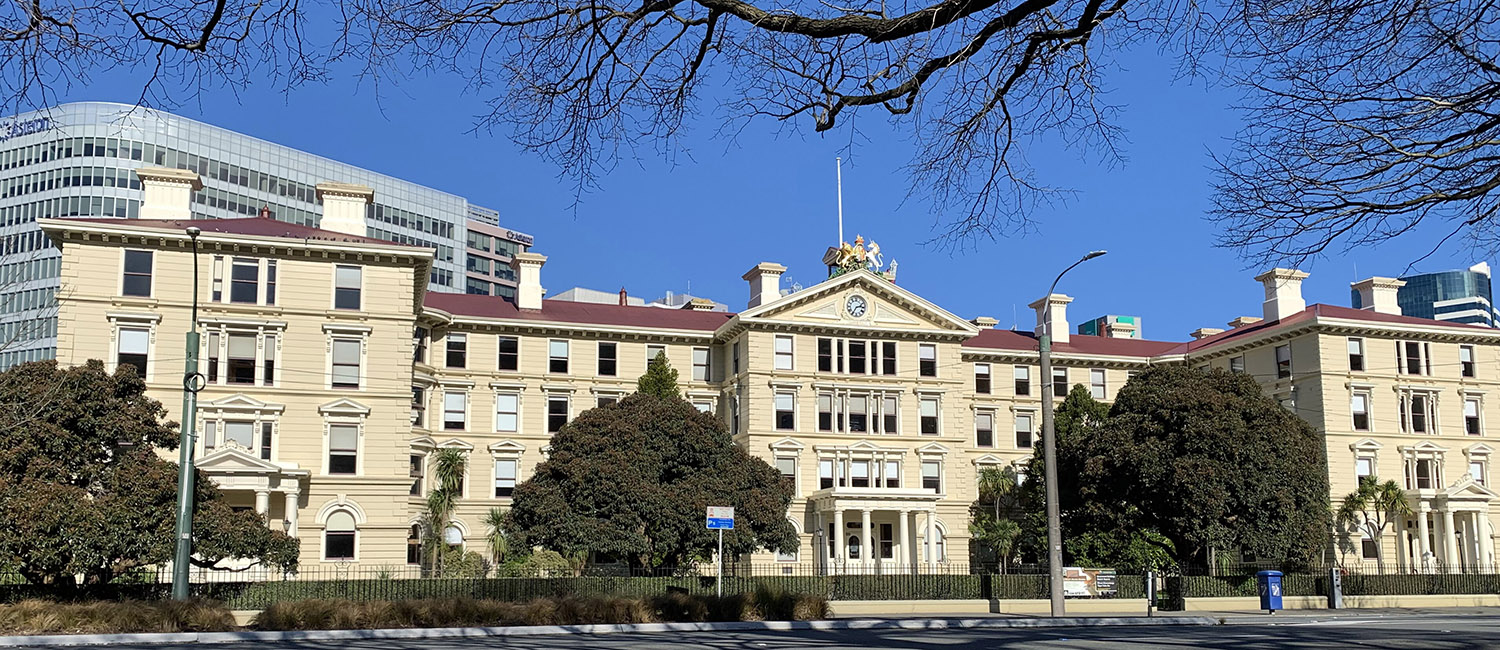
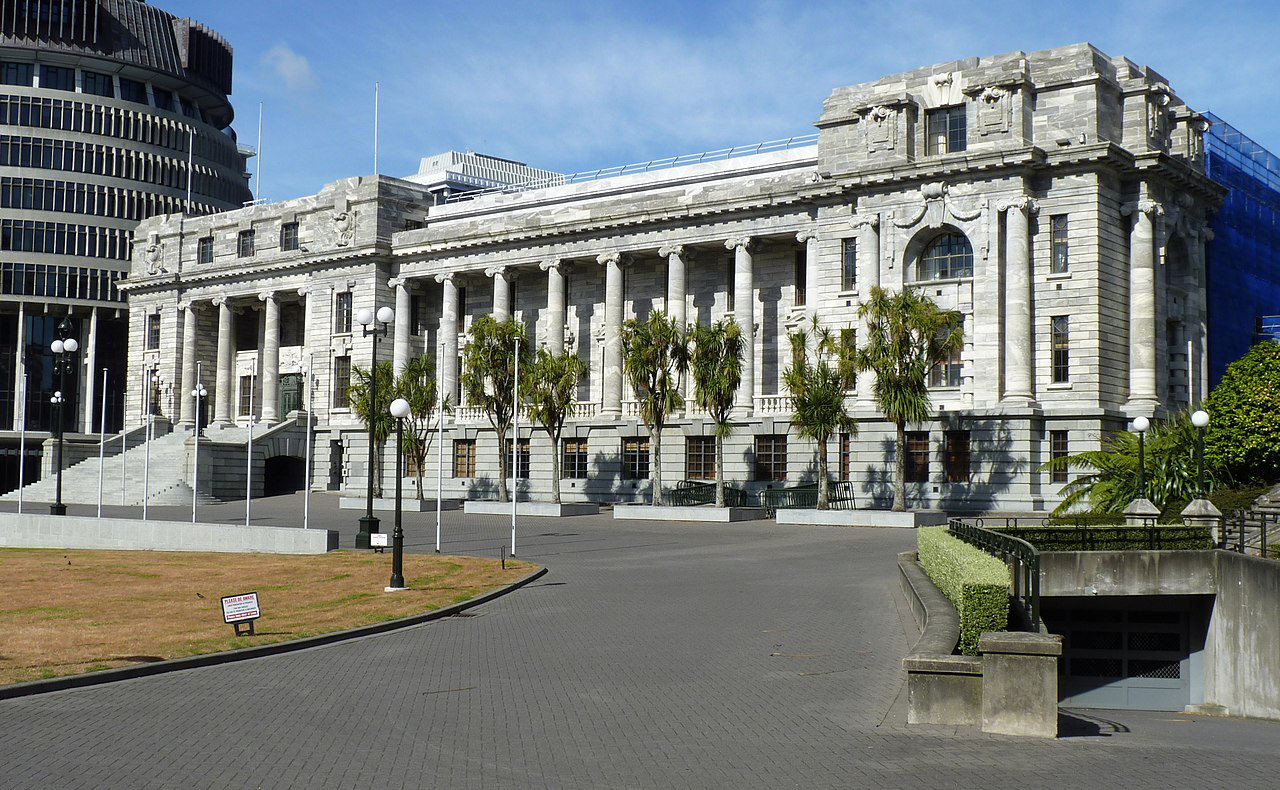
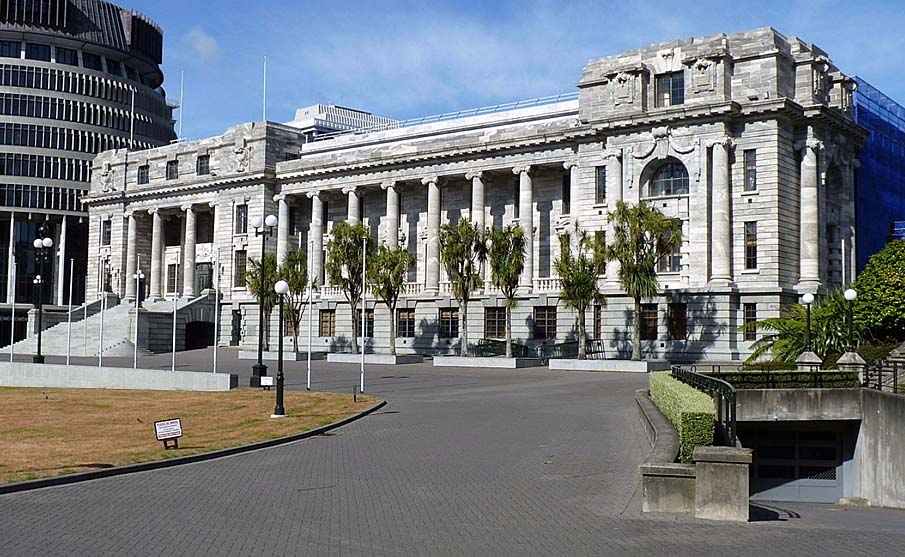
The General Assembly Library, now known as the Parliamentary Library, was designed by Thomas Turnbull (1824-1907). Started in 1897, and completed in 1899, it stands on the former site of Wellington's Provincial Government Building. The architectural quality of the Parliamentary Library building, its internal spaces, light and quality of fittings all mean that the building is one of New Zealand's architectural treasures. With the neighbouring Parliament House (built in 1912-22), Beehive, and the wooden Government Building (1871) it has been the site of many important events of New Zealand's history.
The land on which the Parliamentary Library sits has long been occupied by Māori. Before 1820 Ngāti Ira and related peoples known as ‘Whatonga-descent peoples’ occupied Te Whanganui a Tara. Successive migrant groups displaced them and by 1840 those with customary rights to Wellington Harbour and its foreshore were Te Ᾱtiawa, Taranaki, Ngāti Ruanui, Ngāti Tama and Ngāti Toa. There was an established Māori settlement at the nearby Pipitea Pā and two streams known as Waipiro and Tutaenui ran through the vicinity. Parliamentary Library sits on land previously known as ‘Kaiota’ and it is believed that there are urupā in the locality. This land was part of the original town of Wellington, New Zealand’s capital from 1865.
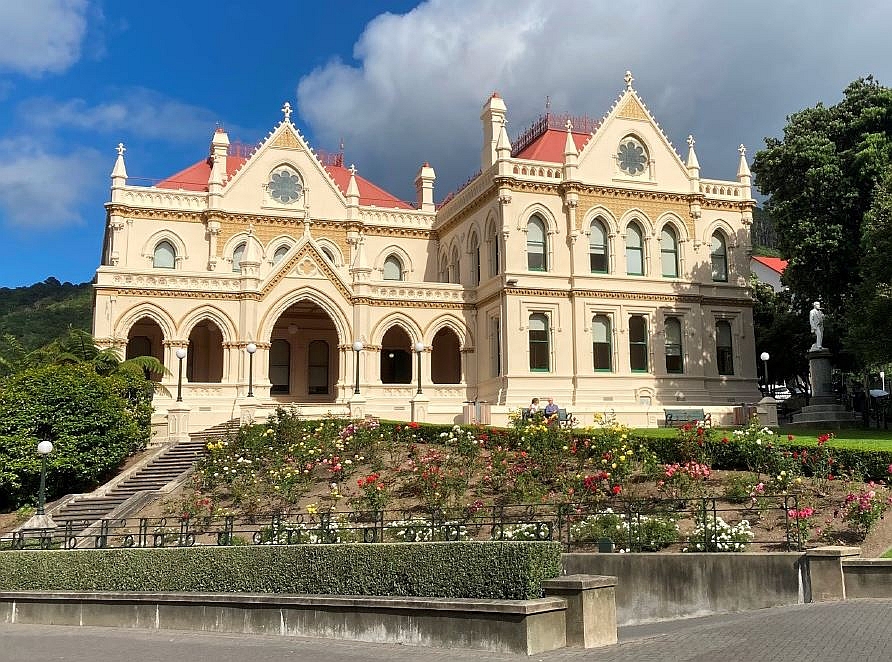
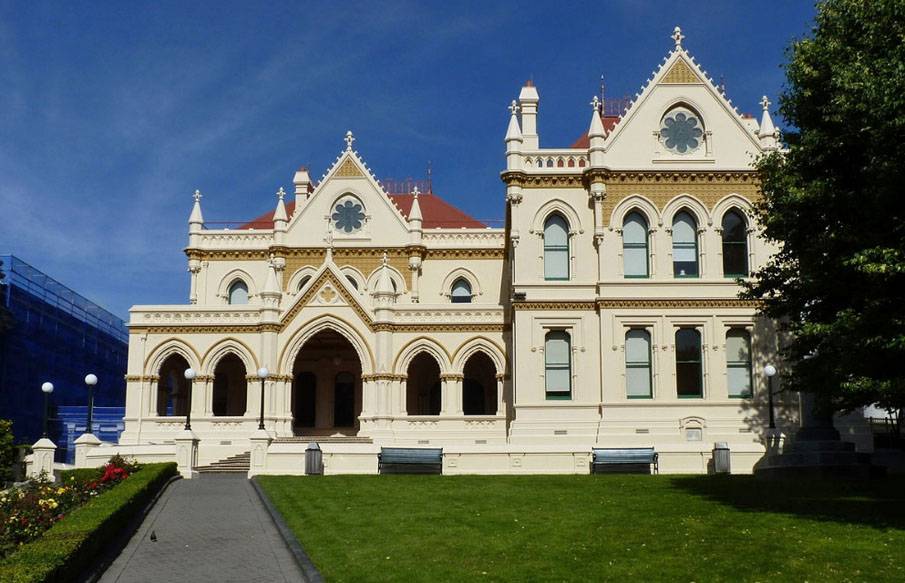
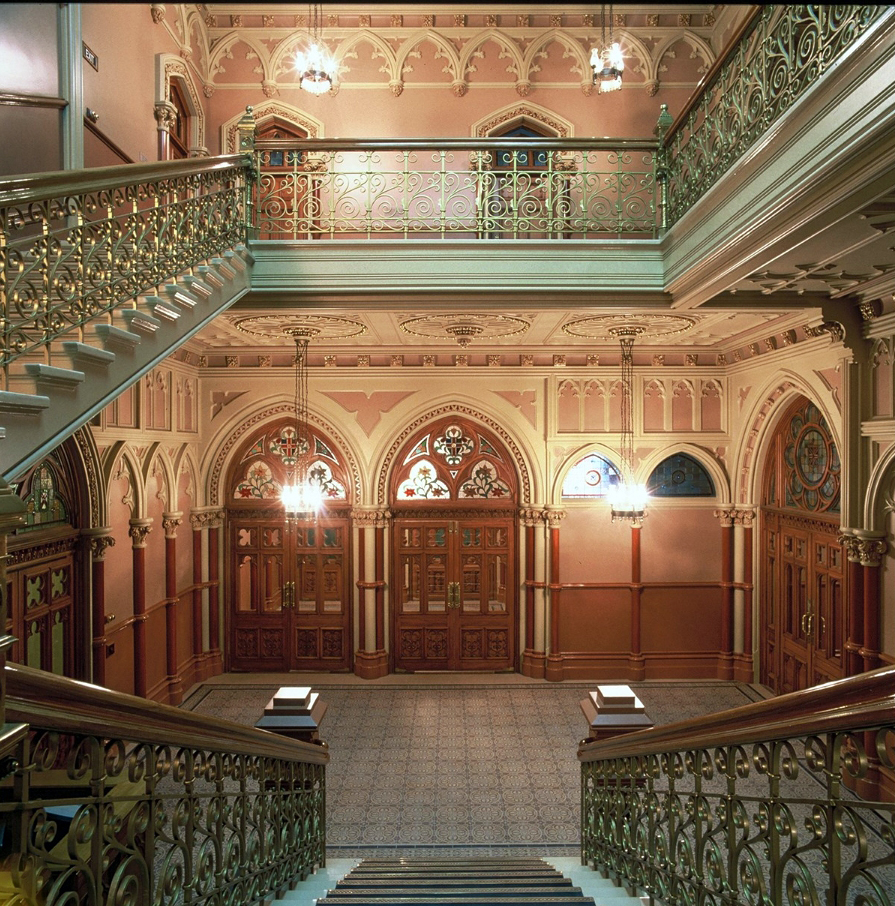
Turnbull was a pioneer in designing buildings that could withstand earthquakes and fires. His original design for the library had three stories with a single-storey portico and a prominent wing. This balanced a wing of the timber Parliament House. The Free Gothic style library has been described as ‘one of the most complete and impressive examples from the late Victorian period still surviving in New Zealand’. The striking asymmetric elevation has two hipped roofs and Venetian influenced detailing. The library is considered to be one of Turnbull’s most important designs and inside and out the building has fittings of exceptional quality.
Parliament halted construction with only two of the three intended floors built, to reduce costs. Concerned that the library would be dwarfed by the neighbouring building, Turnbull resigned from the project in protest. At his request, the foundation stone, which had been laid in 1898, was altered so that his name was not visible. The job of ensuring that the work was completed fell to John Campbell (1857-1942), the Government Architect. He redesigned the parapet, gable and roof of the building, and many of the intended decorative features were removed from the design. A system of firewalls and doors were built within the building and between the old wooden parliament building and the new building; as a result, the library survived the fire that completely destroyed the timber portions of the Parliament building in 1907.
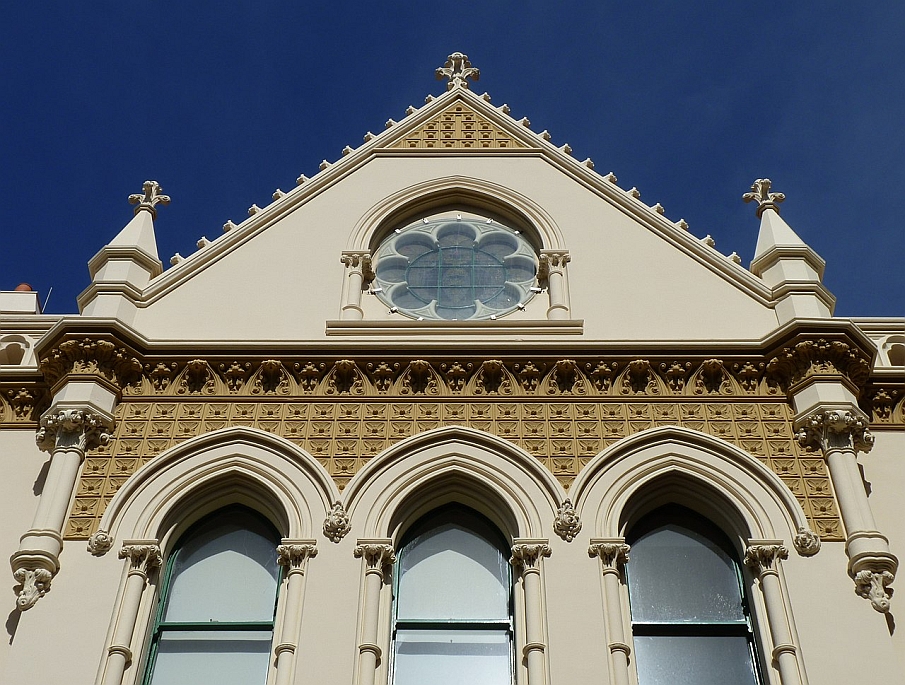
Parliamentary Library has been the site of many important events. In 1901 the portico was draped in black cloth as crowds gathered to mark the death of Queen Victoria; in 1907 the governor announced that New Zealand had become a Dominion from its steps. The leader of the opposition had offices in the building for many years until the Beehive was completed in the 1980s, at which time the library expanded to occupy the entire building. As a result of concerns about earthquake safety, a major refurbishment of the library and Parliament House was undertaken in the 1990s. In 1992, while this work was progressing, the building was significantly damaged by fire, destroying some of the fixtures that the restoration was attempting to preserve. Also during this work, four gables that had been removed in the 1950s for earthquake reasons were re-built and the original rose windows were replicated. The building continues to house Parliament's library.
The land on which the Parliamentary Library sits has long been occupied by Māori. Before 1820 Ngāti Ira and related peoples known as ‘Whatonga-descent peoples’ occupied Te Whanganui a Tara. Successive migrant groups displaced them and by 1840 those with customary rights to Wellington Harbour and its foreshore were Te Ᾱtiawa, Taranaki, Ngāti Ruanui, Ngāti Tama and Ngāti Toa. There was an established Māori settlement at the nearby Pipitea Pā and two streams known as Waipiro and Tutaenui ran through the vicinity. Parliamentary Library sits on land previously known as ‘Kaiota’ and it is believed that there are urupā in the locality. This land was part of the original town of Wellington, New Zealand’s capital from 1865.
Turnbull was a pioneer in designing buildings that could withstand earthquakes and fires. His original design for the library had three stories with a single-storey portico and a prominent wing. This balanced a wing of the timber Parliament House. The Free Gothic style library has been described as ‘one of the most complete and impressive examples from the late Victorian period still surviving in New Zealand’. The striking asymmetric elevation has two hipped roofs and Venetian influenced detailing. The library is considered to be one of Turnbull’s most important designs and inside and out the building has fittings of exceptional quality.
Parliament halted construction with only two of the three intended floors built, to reduce costs. Concerned that the library would be dwarfed by the neighbouring building, Turnbull resigned from the project in protest. At his request, the foundation stone, which had been laid in 1898, was altered so that his name was not visible. The job of ensuring that the work was completed fell to John Campbell (1857-1942), the Government Architect. He redesigned the parapet, gable and roof of the building, and many of the intended decorative features were removed from the design. A system of firewalls and doors were built within the building and between the old wooden parliament building and the new building; as a result, the library survived the fire that completely destroyed the timber portions of the Parliament building in 1907.
Parliamentary Library has been the site of many important events. In 1901 the portico was draped in black cloth as crowds gathered to mark the death of Queen Victoria; in 1907 the governor announced that New Zealand had become a Dominion from its steps. The leader of the opposition had offices in the building for many years until the Beehive was completed in the 1980s, at which time the library expanded to occupy the entire building. As a result of concerns about earthquake safety, a major refurbishment of the library and Parliament House was undertaken in the 1990s. In 1992, while this work was progressing, the building was significantly damaged by fire, destroying some of the fixtures that the restoration was attempting to preserve. Also during this work, four gables that had been removed in the 1950s for earthquake reasons were re-built and the original rose windows were replicated. The building continues to house Parliament's library.